
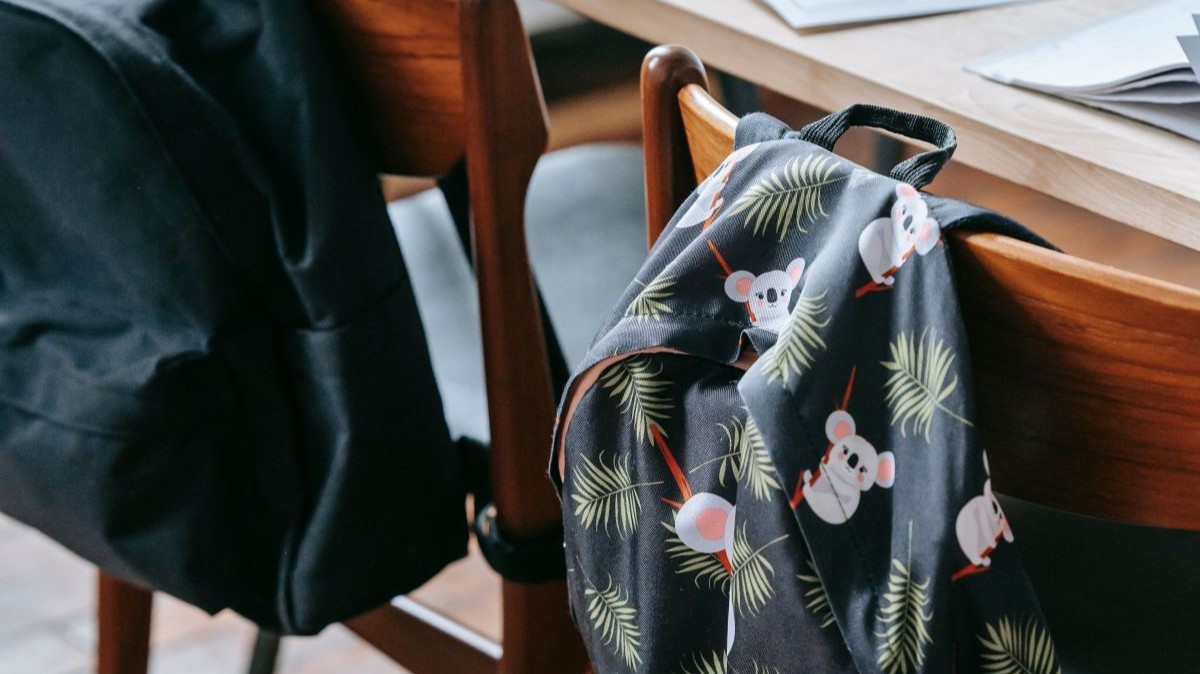
In Saskatchewan, fall brings a shift from the energy of summer to the routines that help keep us balanced. The transition can feel a little chaotic, with plenty of things to put away and new schedules to manage. This fall, I’m looking at how we can make our household routines work better, starting with two of our biggest areas of waste: lunches and clothing.
Our summers are short, and we make the most of them. From camping trips and festivals to backyard gatherings that continue well into September, there’s always something happening. I’m originally from southern BC, and I love living here because of the creative, caring people who find ways to keep things fun, even as the weather cools. Saskatchewan summers are full of activity, but all that activity also means managing our resources and the waste we generate.
As I look at the camping gear on my porch, school backpacks coming out, and the changing colours of October, I’m reminded to slow down and think about the systems we have in place. In systems engineering, we know that some of our most effective solutions come from planning and rethinking how things work (Beasley, 2014). In our busy lives, taking a few moments to reflect can help us appreciate what we have while finding ways to use our resources more wisely. Research suggests that regularly reflecting on what we’re grateful for can improve our well-being (Emmons & McCullough, 2003). My family has a saying: “These are the good days.” We say it often, and I expect we’ll say it even more as winter approaches. The more we remind ourselves of this, the more we appreciate the everyday moments.
We’re a family of foodies, but like many households, we sometimes struggle to balance good meals with busy schedules. Food loss and waste are significant challenges in Canada. The average household wastes $1,300 worth of food each year, and Canadians generate 6.9 million tonnes of CO2 equivalent in greenhouse gas emissions from food waste (National Zero Waste Council, 2022).
Some practical ways to reduce food waste include meal planning, making consistent grocery lists, checking what’s already in the pantry and fridge, freezing leftovers, and buying what we need for the near future (FoodMesh, 2026). Choosing seasonal ingredients that can be used in different meals also helps keep things interesting.
This week, we sat down as a family to plan our lunches. Involving children in meal preparation and grocery shopping can help build a healthier relationship with food and reduce food fussiness (Broad et al., 2021). Our planning also helped us identify a few easy choices. My child likes whole apples, which come with their own packaging, and we all enjoy cheese, so trying different varieties is a fun way to add some variety to our lunches. Finding time to plan together can be challenging, but it’s also a chance to connect. We’re looking forward to making lunch planning a regular part of our routine this fall.
Clothing is another area where we can make more thoughtful choices, especially as the weather cools and children seem to outgrow things overnight. The global textile recovery system is facing significant challenges, partly because of the volume of clothing being produced and the amount of poor-quality clothing that quickly becomes waste (Sajdeh et al., 2025). Each Canadian generates an estimated 81 pounds of textile waste annually (Weber et al., 2023).
Like many waste streams, textile waste is a challenge that requires both broader system changes and everyday decisions. With a budget to consider, we’ve developed a few habits that work for our family. We pass clothing along to friends, and mending and repairing things are normal parts of life in our house. We try to buy fewer, better-quality items when we can, and we enjoy the adventure of thrifting.
I also try to wash clothes less often and take care when I do. Personally, I’d rather be known for my character than for having something new to wear. I still rely on staple pieces from my minimalist phase, and I like the idea of building a personal style over time rather than constantly buying new things. These choices help us reduce waste while celebrating individuality. I’m fortunate to be part of a supportive community, and I hope we can continue building a culture where sharing, repairing, and reusing are part of everyday life.
As we settle into fall, I want to remember the good times, appreciate the present, and make a few plans for the cozy season ahead. Here in Saskatchewan, we know how to make the most of the seasons.
These are the good days.
Claire Amundsen, P. Eng.
Sources
Beasley, R. (2014). The Barriers to Systems Thinking. INCOSE International Symposium, 22(1), 517–531. https://doi.org/10.1002/j.2334-5837.2012.tb01353.x
National Zero Waste Council. (2022). Love Food Hate Waste Canada benchmark study methodology [Report]. Love Food Hate Waste Canada. https://lovefoodhatewaste.ca/wp-content/uploads/2022/05/LFHW_Canada_Benchmark_Study_FAQ_2022_EN-May2022.pdf
FoodMesh. (2026, September 14). 2026 National Food Study. Love Food Hate Waste Canada. https://lovefoodhatewaste.ca/about/research/
Broad, J., Forbes, L. E., Darlington, G., Ma, D. W. L., & Haines, J. (2021). Child involvement in meal preparation and grocery shopping is associated with lower levels of food fussiness among young children. Applied Physiology, Nutrition, and Metabolism, 46(12), 1543–1546. https://doi.org/10.1139/apnm-2021-0390
Emmons, R. A., & McCullough, M. E. (2003). Counting blessings versus burdens: An experimental investigation of gratitude and subjective well-being in daily life. Journal of Personality and Social Psychology, 84(2), 377–389. https://doi.org/10.1037/0022-3514.84.2.377
Sajdeh, R., Martínez-Pardo, C., Felde, A. M., Lange, T., Tieri, E., & Evans, E. (2025, August 12). Spinning textile waste into value. Boston Consulting Group. https://www.bcg.com/publications/2025/spinning-textile-waste-into-value
Weber, S., Dias, G. M., Habib, K., & Weber, O. (2023). Textile waste in Ontario, Canada: Opportunities for reuse and recycling. Resources, Conservation and Recycling, 190, 106821.
