

The Saskatchewan Waste Reduction Awards recognize excellence in waste reduction in Saskatchewan. They are intended to promote leadership and inspire all sectors of the province to undertake waste reduction projects. These awards provide winners with well-deserved recognition while also highlighting local success stories for others to follow.
Nominations for the 2026 awards will open in November, 2026.

Thank you to SaskTel for sponsoring these awards.
Judging:
- Environmental impacts (i.e., quantified reductions in waste, contributions to circular economy)
- Innovation and progressiveness
- Leadership
- History and track record
- Overall environmental commitment
- Reduce: prevent waste by minimizing our consumption of resources and maximizing the efficiency of their use. Helping move SK from linear to circular production cycles
- Re-use/repair: ensure resources and items are designed to be used for as long as possible without replacement, including repair and refurbishing
- Recycling: turning waste into new useful materials or products, including composting organic waste
Judging is done by the SWRC Awards Committee. Each person/organization may only be nominated for one award each year. Past winners may be nominated again, but not for the same program/activity. There may not be an award presented in every category every year.
Categories:
Lifetime Achievement
Saskatchewan residents who through their actions, work and/or volunteer efforts, have provided outstanding waste reduction leadership and inspiration for many years.
Individual
Individuals who live in Saskatchewan who have made extraordinary contributions to waste reduction.
K-12 School or Youth Service Organization
Elementary/secondary schools or youth service organizations (i.e. 4-H, Big Brothers Big Sisters, Boy/Girl Schouts, etc.) who have demonstrated exemplary commitment and leadership by involving peers, schools, neighbours, or communities in waste reduction and conservation efforts.
Institution
Institutions (i.e. colleges, trade schools, universities, hospitals, nursing homes, etc.) who operated in Saskatchewan in the current year with outstanding waste reduction initiatives.
Business
Businesses, including crown corporations, who have operated in Saskatchewan in the current year with outstanding waste reduction initiatives. Separate categories for businesses with under/over 100 employees.
Non-profit Organization
Non-profit or grassroots groups operating in Saskatchewan that have waste reduction programs beyond expectation.
Municipality
Saskatchewan municipalities who have demonstrated excellence and leadership in waste reduction. Separate categories for municipalities with a population of under/over 5,000.
Partnership
Partnerships involving two or more parties from among eligible Saskatchewan municipal, corporate and/or non-profit organizations that demonstrate the benefits of co-operation and extraordinary waste reduction achievements.
Festival or Event
Any organization’s event (i.e. cultural events, community events, sporting events, conferences, etc.) that demonstrated excellence and innovation in waste reduction.
Past Winners:
Small Business: RNF Ventures Ltd
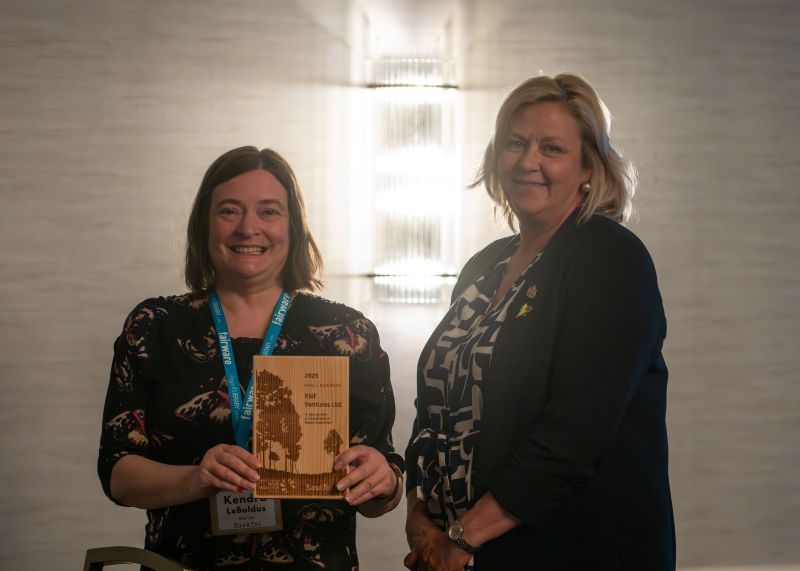
RNF Ventures were nominated for their security upgrade renovation project at Pine Grove Correctional Centre. This job involved replacing 180 detention doors and the installation of new security controls throughout the facility. Despite the challenge of working in an occupied detention centre under active security constraints, RNF Ventures achieved a waste diversion rate of 97% by sorting and recycling metals, paper, concrete, and other materials.
Large Business: Ardent Mills, Saskatoon
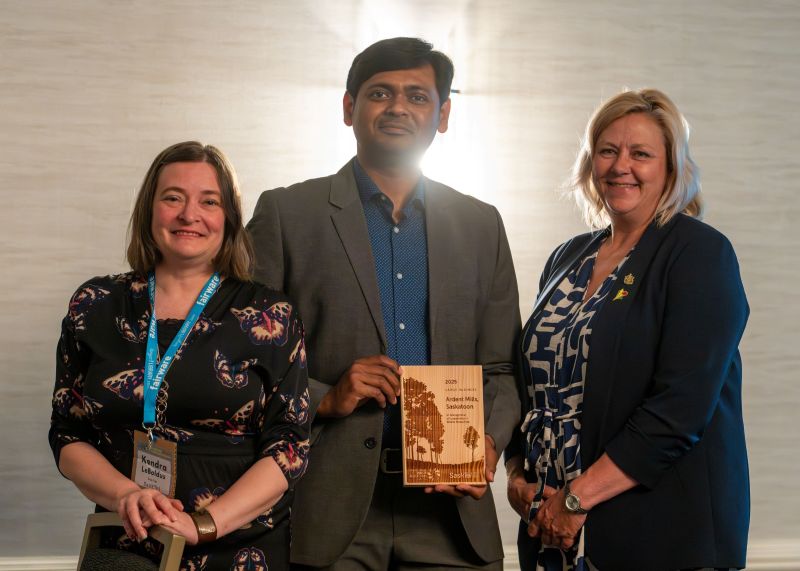
Ardent Mills is a flour milling company with facilities across North America. Between 2024 and 2025 their Saskatoon facility achieved a 44% reduction in landfilled waste. Key changes included more accurate tracking, clearly-labelled waste segregation zones, and an ‘upcycled avenue’ that redirects flour waste and other organics toward animal feed, composting, or carbon extraction. These efforts strengthened partnerships with local recycling organizations, generated significant cost savings, and prevented >350 tonnes of CO₂ equivalent emissions annually.
Non-profit Organization: The Salvation Army Thrift Store
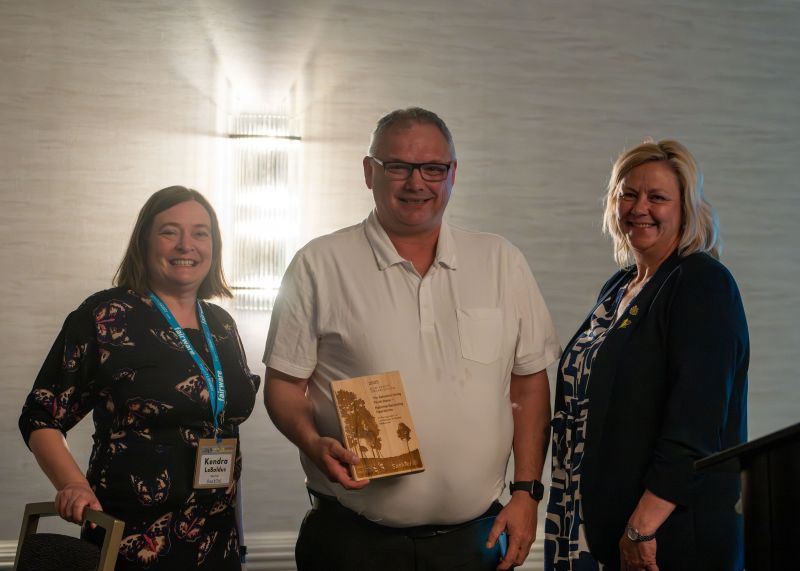
The Salvation Army Thrift Store carefully sorts donated clothing, footwear, household goods, and small appliances so that sellable items return to the community through their stores, while unsellable materials are directed to vetted recycling partners, ensuring as little as possible ends up in a landfill. In 2025 their Saskatchewan operations diverted over 1,600 metric tonnes of material.
Municipality (<5,000): Town of Maple Creek
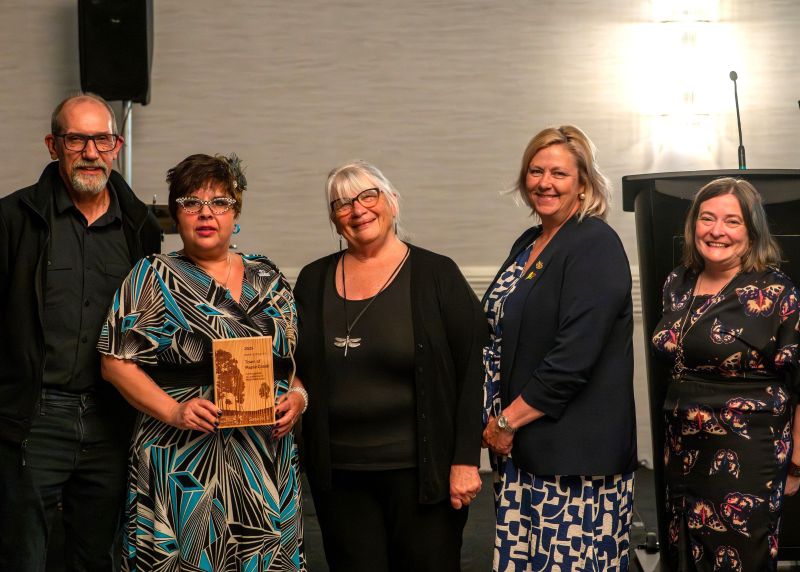
The Town of Maple Creek has multiple waste diversion programs including curbside recycling and a mulch program for yard waste. Recognizing food waste as a gap in their existing programs, they ran a 2025 pilot project testing FoodCyclers as a reduction method. The 40 households involved reported a dramatic decrease in their garbage, with some going from four bags a month down to one.
Municipality (<5,000): Resort Village of Candle Lake
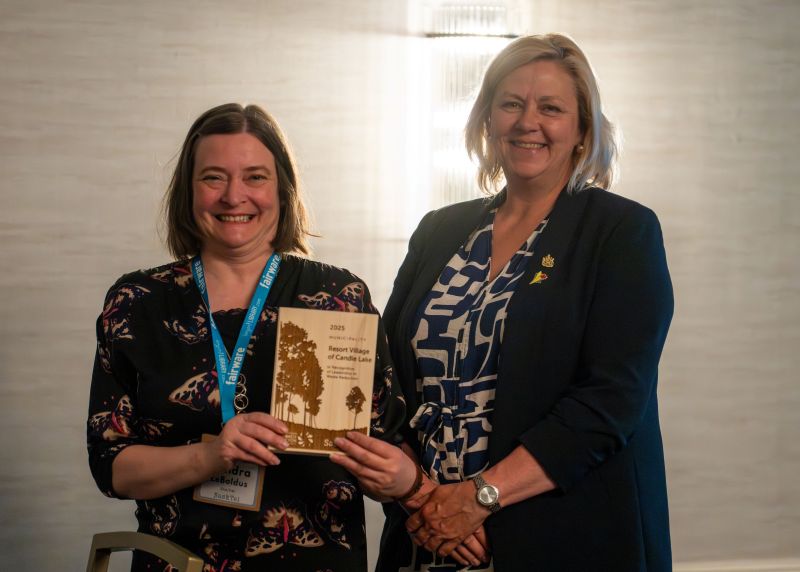
Candle Lake has a permanent population of roughly 1,000 — but a summertime tourism peak of up to 10,000. The Resort Village has met the challenge of managing that influx of waste responsibly through a wide range of programs, including:
- Drop-off points for used oil, antifreeze, batteries, electronics, and household hazardous waste
- Scrap metal collection
- Seasonal yard waste collection
- Grab-and-Go reuse area at the landfill
- Curbside Swap Meet program
- Volunteer-run bottle recycling
Partnership: Gateway Co-op Project – Sturgis, SK
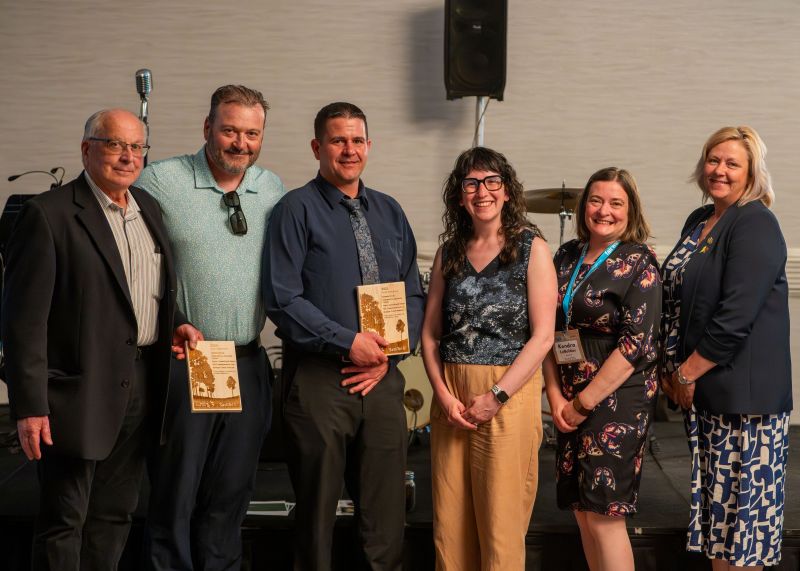
Gateway Co-op’s new food and liquor store in Sturgis used salvage timber from decommissioned grain elevators for its primary building material. Five groups collaborated to make it happen:
- Gateway Co-op
- Federated Co-operatives Ltd
- Vereco Consulting & Design
- VOCE Developments Corp
- Heritage Timber Products
The result is a 12,682 square foot commercial building constructed of 82% reclaimed timber (148,427 board feet, 167 tonnes).
Lifetime Achievement: Kevin Acton

Kevin opened the first SARCAN depot in Saskatoon in June 1988. Since then, Kevin has been a depot Supervisor, managed the Saskatoon Processing Plant, led capital planning and strategic partnerships as the General Manager of Special Projects, and now manages salvage markets and provincial/national collaborations for SARCAN as the Director of Operations. Through his leadership, commitment, and an unwavering passion for recycling, Kevin has seen SARCAN grow into an organization that conserves 46 million pounds of resources every year and has recycled 11 billion beverage containers since it started. Additionally, Kevin led SARCAN to partner with other stewardship organizations to collect other hard-to-recycle materials including paint, electronics, batteries, and household packaging at SARCAN depots.
Individual: Laurie Blondeau

Laurie Blondeau is a project manager at Saskatchewan’s Ministry of SaskBuilds and Procurement and a LEED Accredited Professional. Laurie requires all her construction/renovation/demolition (CRD) projects to divert at least 75% of waste from the landfill by making sure CRD waste is accurately tracked and recorded. Laurie has overseen many projects over her career, such as the 2024 upgrade of the Kilburn Hall Youth Detection Centre where they were able to divert over 75% of the waste from the project (equal to 36,340 Kg).
Small Business: NULIFE GreenTech

Founded in 2016 by Brock Eidem and Jerry Kristian, NULIFE GreenTech is a trailblazer in the field of high-moisture organic waste management solutions. They developed a hydrothermal liquefaction process to transform organic waste into biocrude oil. This oil can be injected underground for carbon sequestration or further processed into a renewable fuel source. Their process is also 95% effective at removing polyfluoroalkyl substances (PFAs) from contaminated waste. In 2024 Nulife diverted 172 thousand kg of wet organic waste from food processors.
Corporation: SLICE Saskatchewan Polytechnic, SustainaCuisina Project.

Sustainability-Led Integrated Centres of Excellence (or SLICE) is an applied research centre in the Faculty of Technology and Skilled Trades at Saskatchewan Polytechnic. This award is for their work on the SustainaCuisina Compost Project, a demonstration compost system at the Prince Albert Campus that handles food waste from the commercial kitchen. They partnered with BrewNature to pilot a novel in-vessel composting system, alongside a more traditional vermicomposting approach. The project also developed an open-access composting toolkit for other groups to use. Between September 2023 and May 2025 over 700 kg of kitchen waste was diverted from the landfill and turned into useful compost.
Non-profit Organization: Library of Things YXE

Library of Things YXE is a community-driven initiative that promotes waste reduction and sustainable living in Saskatoon by providing affordable access to shared tools, equipment, and household items. Donations are cleaned up, repaired if needed, and given a second life. Items range from small things like blenders, serving dishes, and board games, to larger items like power tools, camping supplies, and sports equipment. Members of the library can borrow items that they would otherwise have to purchase. The Library also organizes skill-sharing workshops and upcycling events.
Municipality (<5,000): Village of North Portal

The Village of North Portal is community of 113 people in southern SK. Their first waste reduction initiative was a bottle and can drop-off, started in the 1990s and still running today. In 2015 they became one of the first small communities in the area to have a municipal recycling program. This started as a recycling depot at the village office and switched to curbside recycling in 2023. The community has also operated an appliance pick-up program since 2020, working with Mryglod Steel & Metals in Estevan to divert old appliances and scrap metal. Since the start of their municipal recycling program, North Portal has diverted over 45 metric tonnes of waste from the landfill.
Partnership: Moosomin Communities in Bloom

Moosomin Communities in Bloom is a volunteer Committee representing the Town of Moosomin, Pipestone Hills Golf Club, Moosomin and District Regional Park, and individuals from the area. This group made environmental stewardship and sustainability a core part of their mission statement. They reduced construction, renovation, and demolition waste (CRD) by repurposing two buildings slated for demolition; the provincial border visitor centre (now a golf clubhouse) and the local armory (now a town meeting space). They also re-used bricks from the old hospital building for park flower beds, installed additional public recycling bins, manage a local drop-off for yard waste (to be used as community garden mulch), and turned several items destined for the landfill into public art.
Partnership: Ministry of SaskBuilds and Procurement & Ministry of Environment

In March 2022 the Ministry of SaskBuilds and Procurement (SBP), in collaboration with the Ministry of Environment, initiated a waste diversion pilot program at the Lloyd Place building. This program expanded waste collection to include organics, paper towels, and mixed recycling, significantly enhancing the existing waste management options. New signs and information posters were created for the building, as well as educational videos. Waste diversion rates in the building increased from a 25% baseline in 2013 to 65% in 2023. In 2024, an additional pilot project to reduce paper towels had air dryers installed in half the washrooms at Lloyd Place.
School: Argyle & MacNeil Elementary Schools

Argyle and MacNeill elementary schools in Regina have demonstrated exceptional commitment to waste reduction through the City of Regina’s Waste Reduction Week Challenge. Students engaged in projects including a Zero Waste Lunch, Recycling Campaign, Composting Initiative, an Upcycling Art Project, and a Waste Audit/Reduction Plan, as well as awareness campaigns about plastic pollution, thrift shopping, and growing food.
Small Business: ReThink BioClean Sales and Service

Based in Regina, ReThink launched their Commercial Cleaning Liquid Refillery in 2021. They offer refillable tanks and a swap-out system for 20L pails of cleaning chemicals. Serving around 130 regular customers across Saskatchewan, primarily in the hospitality sector, the company also provides a mobile unit for bulk deliveries and partners with local equipment repair companies. By encouraging customers to save their empty containers for refilling, ReThink BioClean diverted 10,300 pounds of plastic from landfills in 2022 and 2023.
Corporation: Acadia Construction

In 2022 Acadia began to accept a variety of construction waste materials including concrete, asphalt, granite, and masonry products, which are then made into graded aggregates for reuse in new construction projects. Acadia’s efforts diverted 85,000 metric tonnes of waste from landfills in 2023. Their recycled materials have been used in numerous projects including the construction of their new office and shop.
Municipality (>5,000): City of Regina

Regina officially launched their city-wide Food and Yard Waste Service in August 2023 after a successful one-year pilot. Within the first month, participation rates were at 64%, with residents diverting 4,784 tonnes of organic waste by the end of 2023. This initiative is expected to save approximately 24,000 tonnes of waste from landfills annually and reduce greenhouse gas emissions by 10,820 tonnes per year. The City of Regina also created Saskatchewan’s first Household Hazardous Materials Depot in 2022. In its first year, the depot assisted 30 residents per day and diverted 177 tonnes of hazardous materials.
Municipality (>5,000): City of Saskatoon

In 2023 the City of Saskatoon implemented a city-wide residential curbside organics collection program. They distributed over 60,000 green carts, each equipped with a kitchen pail and information package. By the end of 2023, more than 17,000 tonnes of organic waste were diverted from the landfill. The program is projected to divert over 20,000 tonnes annually, reducing the need for new landfill space and cutting greenhouse gas emissions by 12,000 to 17,000 tonnes of CO2 per year.
Festival / Event: Affinity Credit Union – Zero Waste

Affinity Credit Union began the Zero Waste Program in 2018 in partnership with the SWRC. Since 2020, Affinity has independently organized the Zero Waste Program at Saskatoon events and festivals including Foodtruck Wars, the Pride Festival, and Wintershines’ Soup Cook-Offs. Their initiatives included
providing compostable and recyclable materials to food vendors, staffing waste diversion stations, and innovating waste management practices. Their efforts have led to impressive waste diversion rates, including 90% at the Wintershines Festival.
Individual: Amy Richter, PhD

Amy’s doctoral thesis contributes to the development of evidence-based waste policy and improves sustainability of land disposal. Amy has developed an algorithm to optimize the design of waste management regions that could reduce collection and transportation costs. She also developed a method for ranking landfill sites for expansion based on their area of influence. She uses this background in data-driven approaches to waste management in her role as a Senior Waste Management Coordinator with the Government of Saskatchewan.
School: Douglas Park School Green Team

The Green Team focused on the waste from Halloween candy wrappers. Students were encouraged to sign a pledge to bring their candy wrappers to school. Using funds from beverage container deposits, they ordered a Terracycle box and collected an estimated 2,500 wrappers. Other initiatives included creating a video on Waste-Free Gifts and collecting 3,850 pounds of paper and recyclable materials from classrooms during recess and transferring it to the main recycling bin.
Small Business: Sustain Market

Sustain Market (formerly Bulk Basket) was a low-waste local market in Saskatoon with bulk foods and household products that customers brought their own containers to fill. In summer 2023, they partnered with Crocus Hill Garden to offer a compost drop-off program, which diverted an estimated 336 gallons of materials. They filled online orders for liquid using mason jars carrying a deposit, reused liner bags from bulk food as garbage bags, and collected items for reuse and recycling from their customers to distribute to local programs and TerraCycle.
Corporation: PCL Construction

The PCL Construction Management Inc. Urban Camp facility diverted 86.5% (129,600 kg) of waste from landfill through separation, recycling and reuse. PCL coordinated with suppliers to reduce waste products at the source in advance of shipping, reused soil on site, employed a reusable concrete formwork system, recycled concrete, and recycled, repaired and reused existing items that were otherwise identified for demolition.
Municipality (>5,000): City of Saskatoon

The City of Saskatoon created the first bylaw in Saskatchewan requiring businesses and organizations to divert both recyclables and organics from landfill. It requires them to have separate, labelled containers for garbage, recycling and organics, to educate employees and tenants annually about which materials are recyclable and how to sort them. Educational resources and ongoing support are also available to aid in diversion efforts.
Partnership: SARCAN and Call2Recycle

SARCAN and Call2Recycle have partnered to expand battery collection to all 73 SARCAN depots. With 52,000 kgs of batteries collected over two years, they exceeded the provincial collection targets both years. They also collaborated on the “League of Super Recyclers” campaign, aiming at younger generations, and created a video shown in SARCAN’s recycling depots highlighting the importance of recycling batteries.
Festival / Event: Ness Creek Music Festival

Ness Creek Music Festival collects deposit beverage containers, and compostable items. The festival is bottled-water-free, with water refilling stations available to the attendees. They also implemented a ban on glow sticks and glitter. The festival routinely hits a waste diversion rate of over 90% for beverage containers and 60-75% for all festival materials combined.
Individual: Tammy Shields

Whether she is demonstrating grain bag rolling at a waste transfer station or sitting down with municipal councilors in a boardroom, Tammy has a unique ability to bring people together. Tammy was instrumental in getting grain bag recycling started in Saskatchewan. Today, she helps keep North America’s first government-regulated ag plastics recycling program running with 8,500 tonnes of grain bags collected over four years.
School: Douglas Park School Green Team

Green Team members diverted 1,700 pounds of recyclable materials from the landfill. They collect recycling from each classroom and compost food waste with a small vermicompost bin. They created videos on how to have an eco-friendly Halloween, how to properly dispose of masks and to encourage reusable ones. They also delivered 110 reusable produce bags to mailboxes around the neighbourhood.
Small Business: HYON

In 2021, HYON was able to divert 50,000 pounds from landfills by selling used goods from consumers and organizations like the Government of Saskatchewan, McMaster University, SGI, and SaskTel. By managing material assets through every stage of the sustainability model, they aim to reach net-zero where no items go to waste.
Corporation: Loraas Disposal North

The Pumpkin Recycling Initiative diverted over 7,000 kilograms of pumpkins from landfill. Loraas partnered with Saskatoon Public Libraries to provide drop-off locations and to educate the public about organic waste diversion. The pumpkins were composted at the Loraas Organics Facility and will be Class A compost after 13 weeks.
Non-profit Organization: Cosmo Industries

A new service, Cans4cosmo, collects deposit containers from homes in Saskatoon then sorts and delivers them to SARCAN. Cosmo offers reusable mesh Kwik bags to their subscribers to use within the program. They had a goal of 150 subscribers to start, but ended up receiving twice as many requests.
Municipality (<5,000): Town of Biggar

In 2021 Biggar began offering curbside organics pickup. In addition to improving residential waste diversion, Biggar has installed three solar power systems to help offset the power consumption of several facilities.
Municipality (<5,000): Town of Churchbridge

Churchbridge’s waste diversion programs include collecting shingles, which are ground and used for street dust control, concrete repurposed for repairing Town wells and clean wood ground into wood chips for use on walking paths. The Town also collects yard waste, electronics, metals and batteries.
Small Business: ZestyKits

ZestyKits delivers kits with ready-to-cook meals throughout Saskatchewan. They focus on using locally produced ingredients and minimal packaging. Packaging is 60% lighter than the average meal kit service and does not sue any ice packs or postage. Customers can choose to have their vegetables wrapped in beeswax wraps rather than a plastic bad, and to further minimize the carbon footprint they use a QR code placed on each meal kit box to share the meal’s recipe online.
Small Business: Zak’s Group of Companies

Zak’s Home Hardware Building Centres in Hauge and Warman have implemented numerous waste-reducing habits, including switching from plastic to paper bags, providing a drop-off for customers to recycle lights and batteries, selling damaged items at a discount or donating them to Habitat for Humanity, recycling metal bindings from lumber, and switching staff lunchroom cutlery and plates from disposable to reusable. The Warman location also collects paint from customers and delivers it to SARCAN.
Corporation: PCL Construction

PCL Construction replaced the ice rink floor at the Lions Arena in Saskatoon. The work included removal and replacement of the ice slab including: new heating pipe, refrigeration pipe, miscellaneous concrete work, new weeping tile system, boiler, sump pit, and new dasher board system. They diverted 96.2% of materials /508 tonnes from the Saskatoon landfill by donating for re-use, salvaging, and recycling.
Municipality (<5,000): Village of Beauval

The Northern Village of Beauval introduced a recycling program to prepare for decommissioning their landfill. In 2020 they diverted over 51 tonnes of waste. Education materials were distributed among the community by local newsletter, local TV, advertisements, bulletin boards, and pamphlets.
Municipality (>5,000): City of Swift Current

Swift Current has two supervised and fenced locations for dropping off organics to be composted. these bins are emptied weekly and usage continuously increases. In 2020, 3,075 cubic yards of diverted materials was processed in compost. Wood waste is separated and stockpiled at the City’s landfill. All diverted wood is chipped annually. Green wood chips are used as the carbon source in the City’s composting operations. White wood chips are used primarily in industrial operations as absorption material.
Individual: Austin Coleman

Austin lives and breathes for waste reduction. Not only does he work at SARCAN Recycling, a huge contributor to waste reduction, but he is passionate about making sure that waste in Regina makes it to the right place. He spends his time going around the city personally cleaning up neighborhoods. He teamed up with the City of Regina to make an informational video on how to use the curbside blue bin and he goes door-to-door to hand out information and give in-person sessions to homeowners to help them recycle properly.
School: The Douglas Park School Green Team

The Green Team at Douglas Park School in Regina was created by 20 students in 2018. They give up their afternoon recess every day to collect the school’s recyclable plastics and paper. Since its formation, the Green Team has diverted 4,077 pounds of recyclable plastics and paper from the landfill. They also manage a vermicompost bin for food scraps. The Green Team educates fellow students, developing videos on how to recycle properly, visiting classrooms at lunchtime, and giving out recycling rewards. They are also working on recruiting Grades 1-4 students to join the Green Team so that their legacy and efforts will be carried on.
Small Business: The Wandering Market

This Moose Jaw based market delivers locally-grown produce and products to Saskatoon, Regina, Herbert, Waldeck, and Swift Current. Most of the deliveries are in coolers or recycled boxes. During the deliveries and pickups customers return many items to be reused including jars, bags, buckets, egg cartons, and boxes. The business encourages their producers to use compostable packaging, which is then composted by a small business in Moose Jaw. They also host a monthly Repair Café, at which over 300 items have been repaired to date.
Corporation: Ministry of Central Services

Palliser Hospital was demolished in 2018/2019. All items of reuse value were removed from the building beforehand and given to community organizations or internal government organizations that wanted mechanical and electrical equipment, tools, filters, lights, etc. With the support of a local recycling company they were able to demolish the building, reclaim the site, and salvage or recycle approximately 97% of the material – diverting over 11,000 tonnes from the Swift Current landfill and saving more than $1 million in tipping fees.
Municipality (>5,000): City of Regina

The City of Regina initiated the GREEN Routine for its employees – a pilot program that involved expanding diversion options, centralized recycling/compost stations, and extensive peer-to-peer encouragement from a well-trained Green team. The pilot buildings went from 10% diversion to 47% over the pilot period. They also replaced their pop-up compost collection events with a Permanent Yard Waste Depot. In its first year the Depot diverted 2660 tonnes of organics – approximately six times the volume over previous years at the pop-up events.
Partnership: SARCAN, City of Regina, & City of Saskatoon

To avoid glass breaking and becoming unrecyclable during the collection process, the Cities of Saskatoon and Regina partnered with SARCAN on a pilot program to allow residents to bring household glass to SARCAN depots. By the end of 2019, Regina and Saskatoon had collected a total of over 139 tonnes of household glass from 760,798 customer visits. Saskatoon reports that its share of glass recycled through the pilot program was greater than the amount of glass recovered from its curbside cart program.
Festival / Event: ReVamp Upcycled Art Show

For the past eight years in Saskatoon the show curator, Melissa Squire, has invited five to ten artists to create using a minimum of 95% recycled or reclaimed materials. The artists are directed to choose materials, processes and techniques that are both environmentally and socially conscious.
The show includes an opening reception where the food and beverage waste is composted. Marketing materials and signage for the opening reception are reused and recycled. The show committee has ensured that the event is always zero waste.
Lifetime Achievement: Ray Sass

Ray is the Southeast Regional Manager for SARCAN Recycling. In his previous 25 year career with SaskAbilities, Ray led the creation of RecyclAbility Enterprises, the city-wide recycling program in Yorkton. As a resident of Yorkton he led the City in the creation of a Solid Waste Management Committee and helped facilitate some impressive programs and targets.
Individual: Sandra Rose

Sandra has a vermicomposting operation that composts food waste from seven households and two restaurants. Sandra gives away pails of worm castings every year and offers a free workshop with each order. Sandra has also been a Compost Coach since 2009, volunteering to talk about composting at community events, public workshops, and home visits.
School: Westmount Community School

Community Coordinator, Anne McLellan, works with students and staff to minimize the amount of single use plastic packaging in breakfasts, lunches, and snacks. They collaborated with SARCAN for beverage container recycling. Classes organized composting and garden growing, as well as participated in Student Action for a Sustainable Future and the Saskatchewan Environmental Society’s 25 Acts of Conservation Program.
Small Business: Green Tree Beauty

All products are chosen after strict evaluation on environmental sustainability, packaging materials, and reuse potential. They reuse or recycle all returned containers through their take back incentive program. They offer free sustainable product education seminars to community groups as well as individuals.
Non-profit Organization: FoodRenew

FoodRenew’s volunteers rescue donatable food from businesses and deliver it to community centres and social agencies. They aim to promote food security and reduce the amount of methane produced at landfills. They bridge the gap between food donors and recipients and have built many partnerships with local businesses to pick up donatable food.
Municipality (<5,000): Town of Hague

The Town of Hague provides options for many waste streams including curbside recycling, separate recycling for plastics, scrap metal, and clothing donations. A compost site diverts yard waste and branches. Once a year the town participates in a Household Hazardous waste collection day and the town office even collects old batteries and cell phones for recycling.
Festival / Event: Saskatoon Pride Festival

Through a waste audit the festival discovered that 95% of the solid waste created could be recycled. With the leadership of board member Melissa Squire, they incorporated several initiatives into their festival, including recycling, composting, purchasing green power, and limiting disposable items distributed by parade floats.
Individual: Nick Daigneault

Nick is the Mayor of the Northern Village of Beauval. During his time in office, Nick’s leadership to bring recycling to both households and businesses in the village has helped extend the life of the landfill. He has been instrumental in fostering new attitudes toward waste in the community, and personally promotes the program via social media and in-person. In just one month, over 20,000 pounds of recyclable material was collected and diverted thanks to the new program.
Small Business: The Backyard Enterprises

The Backyard runs a Mexican food truck called Malinche. Unlike many food truck or restaurants, their team has adopted a strong waste minimization philosophy and speaks regularly about how to improve waste reduction practices. They limited themselves to one litre of garbage a day which they accomplished by using reusable dishes, paperless receipts, reusable steel straws, and diverting food scraps through a bokashi composting system.
Corporation: London Drugs (Saskatchewan)

London Drugs helps the people of Saskatchewan reduce waste with their What’s the Green Deal? sustainability program. This program offers free drop-off for hard-to-recycle items. Each store works hard to manage its own waste too, sorting through any garbage to maximize recycling. As a result, they have achieved a 91% diversion rate.
Partnership: Bridge City Bicycle Co-op & City of Saskatoon

In 2016 the City of Saskatoon and Bridge City Bicycle Co-op (BCBC) partnered to make better use of the hundreds of bicycles disposed of at the landfill each year. In 2017, the City of Saskatoon Landfill received 565 bicycles for disposal. Of these, 285 (50.4%) were successfully recovered, in whole or in part, for refurbishment and reuse by the BCBC. The partnership has been extended to 2018, with goal of 60% diversion.
Individual: Lynn Needham

Lynn is Maple Creek’s Manager of Environmental Services, and since starting with the position in 2015 he has completely transformed the Town’s landfill – increasing its life expectancy from 10 years to 65 years. Where once there was unmonitored dumping, there are now orderly systems for reuse, recycling, and proper waste disposal.
Small Business: Alchemy Clothing & Salon

Alchemy is a busy shop located in the heart of Saskatoon, which employs 15 staff. Waste reduction has always been an important initiative for owner Melissa Squire. The entire shop is part of the Green Circle Salon program – an organization that assists salons in recycling and repurposing hair, foils, colour-tubes, papers and plastics as well as diverting excess hair chemicals from going down the drain.
Corporation: Titan Carbon Smart Technologies

Titan is Saskatchewan’s largest biomass recycler. Titan’s bio-refinery diverts wood and organic waste from landfills, processes that waste into high quality products, and sequesters carbon through the production of biochar. Established in 2006, Titan’s mission is to develop ways to produce sources of clean energy and carbon-smart products.
Non-profit Organization: Electronic Products Recycling Association – Saskatchewan

Since 2007 EPRA has operated Saskatchewan’s electronic products recycling program for consumers and businesses, collecting 465,000 electronic devices every year. In the fall of 2016 EPRA Saskatchewan teamed up with the Saskatchewan Science Centre to bring the Recycle My Electronics Education Event to the province. The event introduced elementary school-aged youth to the importance of e-recycling.
Municipality (<5,000): Town of Kindersley

Since the beginning of 2015 the Town of Kindersley has made significant and lasting enhancements to the operation of the Kindersley Waste and Recycle Centre and has implemented curbside recycle collection service. Those two steps have produced dramatic results in waste minimization for the Town, resulting in a 66% increase in the volume of recyclables collected in the city over the past two years.
Lifetime Achievement: Wally Lorenz

Wally has been the Chair of the Association of Regional Waste Management Authorities of Saskatchewan (ARWMAS) since it was established in 2004. Under Wally’s leadership, ARWMAS has grown to represent 268 municipalities. ARWMAS members have diverted more than 100,000 tonnes of waste from landfills over the past 10 years. Wally is also a member of the advisory committees for Agricultural Plastics and Paint Recycling and participated actively in the development of the Multi-Material Recycling Program.
Small Business: PV Waste Solutions

PV Waste Solutions is a family-owned disposal, composting, and soil remediation company in Regina. Their composting operation, which includes Christmas trees, pallets, and other wood waste, has diverted 1,141 tonnes from landfill over the last three years. PV also diverted 144 tonnes of asphalt shingles for use in building roadways and dust control. With their industrial continuous flow vermicomposter, PV can supply Regina with red wiggler worms and educate the public on indoor composting.
Corporation: Envirotec Services

Envirotec’s broad range of environmental services are utilized by almost every industry in Saskatchewan. Their Household Hazardous Waste (HHW) services support communities who offer HHW events. Since 1998 Envirotec has partnered with SARRC, the provincial used oil recycling program, to transport and process used oil materials. Since 2006, Envirotec has partnered with Product Care, the provincial paint recycling program, to sort and pre-process paints and aerosols.
Non-profit Organization: EPRA-SK, Takeback to Touchdown

EPRA Saskatchewan created the “Takeback to Touchdown” contest to encourage residents to recycle end-of-life electronics. The promotion harnessed the power of our passionate Roughrider fan base. It was a huge success which saw double-digit increases in takebacks in some communities. In the end over 30,000 devices were collected.
Municipality (>5,000): City of North Battleford

In 2014 North Battleford implemented individual garbage containers for all its residents and started a curbside recycling program, alternating collection each week. Within two years household waste collection was down by 50%. Since the program’s launch the amount of compostable materials collected has also increased by almost 200%. Residents are now more accountable for their own waste, and the City is on a path for continued waste diversion in the future.
Partnership: Saskatchewan Roughriders, North Central Community Association, & City of Regina

In 2007 the Saskatchewan Roughriders, the City of Regina, and the North Central Community Association created the Go Green Program. This partnership collects an average of 300,000 cans and bottles at Mosaic Stadium each football season. North Central uses 70% of the collected funds to hire over 50 workers who are underemployed, or youth needing work experience. This partnership has demonstrated the potential for waste reduction to transcend environmentalism and bring about greater social good.
Small Business: The Hollows

The Hollows is a locally owned restaurant operating out of the historic Golden Dragon building in Saskatoon. Chef and Owner Christie Peters chose to honour the space, incorporating the previous owner’s décor and investing in the repair and reuse of the original kitchen equipment. The Hollows composts all food waste, grows their own vegetables, and recycles all take out containers and packaging. They actively avoid using or purchasing product/supplies that cannot be composted or recycled.
Small Business: ReVamp Salon

ReVamp Hair Salon is the first salon in Saskatoon and one of only three salons in SK to participate in the Green Circle Salon program. ReVamp has implemented a comprehensive recycling and repurposing program that ensures hair, foils, plastics, and chemicals get diverted out of the waste and water streams. Their garbage output has moved from a full bag daily to a quarter bag weekly, a reduction of approximately 96% from similar sized salons.
Corporate Leadership: Federated Co-operatives Ltd

FCL is committed to reducing waste, increasing waste diversion, and being leaders in environmental sustainability. The strategies and tactics they have adopted for waste reduction, recycling, and reuse have been implemented across their organization for more than two decades. They have championed food waste diversion as a long-term partner with food banks in Winnipeg, Saskatoon, Calgary, and Edmonton, resulting in hundreds of thousands of kilograms of food donated on an annual basis.
Non-profit Organization: Saskatchewan Scrap Tire Corp (SSTC)

The Black Gold Rush is the SSTC’s one-time free scrap tire clean-up program aimed at cleaning up tire piles on private property and farmland throughout Saskatchewan. Since 2010, 157 rural municipalities have participated in the Black Gold Rush program, with a total of 372,677 scrap tires (18 million pounds) have been collected.
Partnership: Envirotec Services & Sask Association for Resource Recovery Corp (SARRC)

Saskatchewan businesses and residents generate 25 million litres of used oil annually. Before the creation of a provincial used oil materials recycling program less than half that amount was collected and recycled. During their 17 year partnership SARRC and Envirotec have recycled over 287 million litres of used oil (enough to fill 48 Olympic-sized swimming pools), 32 million oil filters, and almost five million kilograms of oil, antifreeze, and DEF containers.
Festival / Event: Saskatoon Civic Breakfast

The City of Saskatoon’s Civic Pancake Breakfast is an annual event that has run for 40 years to kick-start summer and has been a zero-waste event for seven years. The organizing committee worked in collaboration with the City’s Environmental Services Branch and, as a result of their efforts, the waste diversion rate rose from 78% in 2008 to 96% in 2014. In the past six years, only one bag of garbage per year has been generated, and last year that bag weighed only 14kg.
2013 winners
- Lifetime Achievement: Grant See
- Individual: Cass Hazel & Genevieve Jones
- School: Student Action for a Sustainable Future (SASF)
- Small Business: Dakine Home Builders
- Corporation: SaskTel, Phones for a Fresh Start
- Partnership: KCDC – Northern Collection Pilot Program & EPRA SK
- Festival / Event: Regina Folk Festival
2012 winners
- Lifetime Achievement: Fred Clipsham
- Individual: Monica Ens
- Small Business: Eat Healthy Foods
- Corporate Leadership: Saskatoon Health Region
- Non-profit Organization: Fruit for Thought
2011 winners
- Individual: Tammy Myers
- School: Grade 6’s in Action, Star City School, Star City
- Corporate Leadership: McIntosh Mall, Prince Albert
- Non-profit Organization: Regina Food Bank
- Municipality: Town of Eston
- Partnership: Regens Disposal & Town of Carlyle
2010 winners
- Individual: Gordon Bonokoski
- School: Dr. Fidji Gendron & the Department of Science, First Nations University of Canada
- Corporate Leadership: London Drugs (Saskatchewan)
- Non-profit Organization: Sherbrooke Community Centre
- Municipality (<1,000): Resort Village of Shields
- Municipality (>1,000): RM of Lakeland
- Partnership: Town of Ituna, Village of Hubbard, Village of Lestock, & RM of Ituna Bon Accord
2009 winners
- Individual: Ken Homenick
- Municipality: City of Saskatoon
- Partnership: Saskatoon Public Schools, Waste Management, & Saskatoon Curbside Recycling
2008 winners
- School: Grade 6 class, Kipling High School
- Non-profit Organization: Destination Conservation Saskatchewan, SK Environmental Society
- Municipality: Town of Pilot Butte
2007 winners
- Individual: Else Marie DePauw
- School: Edie Shepherd & the Unity Public School Green Team, Unity
- School: Curtis Wagner & St. Angela School, Saskatoon
- School: Kathleen Hilsden & Andrew Exelby from Lumsden School, Lumsden
- Corporate Leadership: Saskatoon Curbside Recycling
- Corporate Leadership: Weyburn Co-op
- Partnership: Solid Waste Management Committee of Yorkton
2006 winners
- Individual: Warren Steeves
- Non-profit Organization: The Hometown Club, Shaunavon
- Corporate Leadership: SaskPower & SaskPower International
- Municipality: Town of Kyle & RM of Lacadena
- Partnership: SaskTel & Computers for Schools
2005 winners
- Individual: Tom Wolf
- School / Youth: SaskTel Directory Recycling Program
- Non-profit Organization: Bea Fisher Enterprises
- Corporate Leadership: SaskTel, Eco(logical)
- Partnership: Saskatchewan Association for Agricultural Societies and Exhibitions (SAASE) & SaskPower
2004 winners
- Individual: Volkmar (Bix) Biederbeck
- Individual: Fernando Selles
- School / Youth: Regina Area Girl Guides
- Non-profit Organization: Gravelbourg Bon Ami
- Corporate Leadership: SaskTel, Paint It Recycled
2003 winners
- Individual: Mary Rooney Cooper
- Non-profit Organization: In Kind Saskatchewan
- Corporate Leadership: Newalta
- Municipality: City of Swift Current
2002 winners
- School / Youth: Grade 9, Sedley High School, Sedley
- Corporate Leadership: RTG / Prairie Rubber Corporation
- Non-profit Organization: Wheatland Regional Centre
2001 winners
- Individual: John & Ada Drobot
- School / Youth: Kelvington 4-H Beef Club
- Corporate Leadership: Weyerhaeuser
- Non-profit Organization: Prince Albert Community Workshop
- Municipality: Town of Radville
2000 winners
- Individual: Ray Nolin
- Corporate Leadership: Xpotential Products
- Non-profit Organization: Kipling Industries
- Municipality: Town of Wilkie
- Partnership: Yorkton & SK Abilities Council
1999 winners
- Corporate Leadership: Regional Psychiatric Centre, Saskatoon
- Non-profit Organization: BTEC
- Municipality: City of Regina, Gr0w Program
- Partnership: Maple Creek & M.C. Opportunities
1998 winners
- Individual: Don Schlosser
- Corporate Leadership: Dairyworld & Parmalat
- Non-profit Organization: Mallard Diversified Services
- Municipality: Village of Conquest
1997 winners
- Individual: Myron Knafelc
- Individual: Geoff Wilkinson
- Non-profit Organization: SSTC
- Municipality: REACT
- Partnership: Moose Jaw Compost Project: City of Moose Jaw, Moose Jaw Exhibition Company, & Keon Gardens
1996 winners
- Individual: Ross Carlson
- Individual: Rick Pederson
- Corporate Leadership: Ecol Laser
- Non-profit Organization: ADD Board #43
- Municipality: Town of Outlook