
The Saskatchewan Waste Reduction Council (SWRC) brought together professionals from across Saskatchewan’s waste, recycling, sustainability and municipal sectors this fall for its Waste Solutions Summits in Saskatoon and Regina. The events offered opportunities to build practical skills, share updates on local initiatives, explore new approaches to waste diversion and work together on solutions to the province’s waste reduction challenges.
Each summit combined hands-on learning, presentations from industry and municipal partners, and tours showcasing local projects and facilities.
Building Skills and Finding Solutions
The day began with Practical GHG Management Training: From Carbon Accounting to Decarbonization, led by ECO Canada. The interactive workshop introduced participants to greenhouse gas (GHG) accounting, including how to identify and calculate emissions, establish baselines, set reduction targets and develop strategies to reduce emissions. With growing expectations around climate action and sustainability reporting, the training provided practical education that organizations can use to support their own emissions management efforts.
In the afternoon, participants took part in roundtable discussions focused on priorities identified through SWRC’s spring member survey. These conversations gave attendees an opportunity to share experiences, discuss common challenges and identify tangible solutions to advance the waste reduction priorities that matter most to Saskatchewan communities and organizations. Summaries of those discussions will be emailed to participants, and are available to other members by request. The SWRC will use the challenges and solutions identified to guide future work on the topics of illegal dumping, contamination, and consistent messaging on recycling.
Showcasing Saskatchewan Initiatives
Presentations highlighted a range of projects and programs supporting waste reduction, resource recovery and renewable energy across the province.
In Saskatoon, Roland Rusnell from the City of Saskatoon shared plans for the city’s new organics facility, while Daniel Zacharias from Saskatoon Light & Power presented on the Dundonald Avenue Solar Farm. Participants also heard updates on SK Recycles from Nikki Forsberg and the Electronic Products Recycling Association (EPRA) Saskatchewan’s program expansion to include small appliances as of Feb 1st 2027 from Gayleen Creelman.
In Regina, our highly anticipated presenter Rebecca Acikahte from Cowesses Ventures was not able to present on plans for the Awasis Organics Facility. We will be trying to book her again for the spring conference to hear more about the Regina based initiative involving in-vessel organics processing and biochar production.
In her place, Lexie Hovanes shared an update on the Tire Stewardship of Saskatchewan highlighting their new facility being built in Saskatoon with Emterra Environmental and Gayleen Creelman again provided an update on EPRA Saskatchewan’s program expansion.
Pamela Berry with the Ministry of Environment also shared updates. The “What We Heard” documents for the hazardous waste/used oil and the renewed solid waste strategy are both due to be published soon. The consultation on solid waste regulation modernization is temporarily on hold but expected to resume next year.
Learning from Local Projects
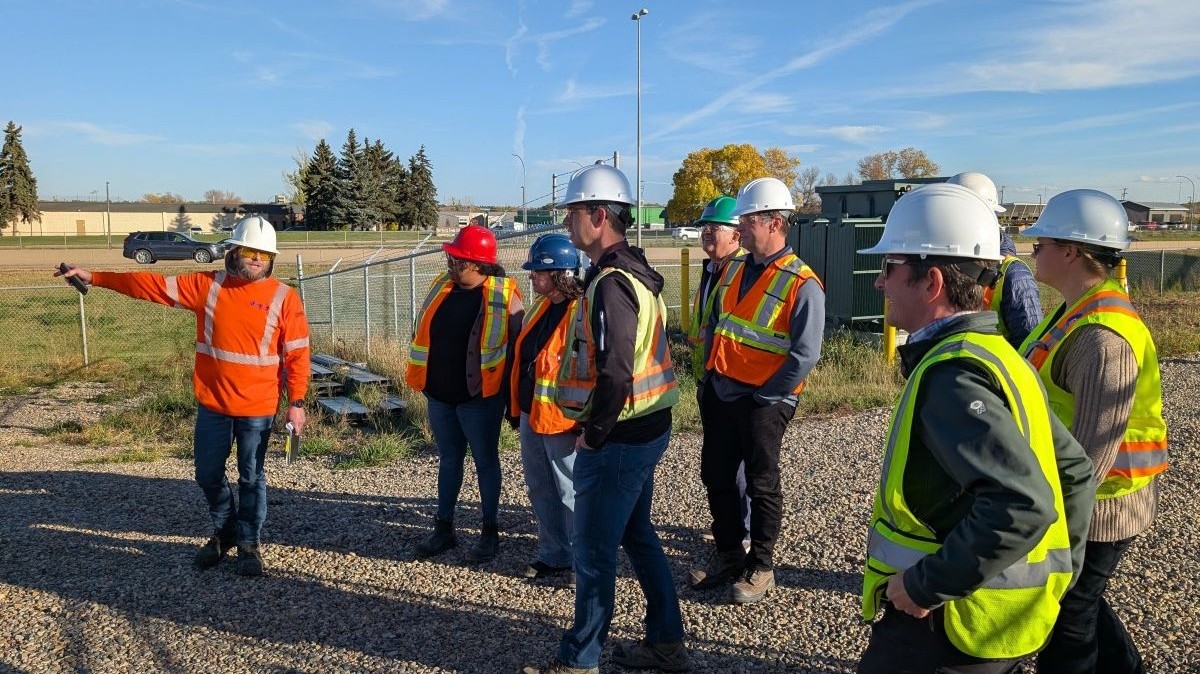
Site tours gave participants the chance to see waste reduction and sustainability initiatives in action.
In Saskatoon, attendees visited the City of Saskatoon Compost Depot, the future site of the city’s new organics facility, and the Dundonald Avenue Solar Farm. The tours connected the day’s discussions with real-world examples of organics management and renewable energy development.
In Regina, participants visited the Regina Food Bank to learn about its food waste diversion program in partnership with Fenek Farms. The tour highlighted the role of collaboration in keeping food and other resources out of the waste stream.
Moving Waste Reduction Forward Together
SWRC’s Waste Solutions Summits are an opportunity for people working in waste management, recycling, government, industry and sustainability to connect, learn from one another and explore practical ways to improve waste reduction in Saskatchewan.
Progress toward a waste-free Saskatchewan depends on collaboration, knowledge sharing and turning ideas into action. SWRC thanks the presenters, tour hosts and participants who contributed their time and expertise to this fall’s events. We look forward to feedback, and making the event even better in 2027.
